Refer a Patient




Say the words “root canal” at a dinner party and watch faces flinch. It’s become shorthand for the worst possible experience — up there with jury duty and filing taxes. But here’s the truth your dentist wishes more people knew: root canals don’t cause pain. They relieve it.
If you’re staring down a root canal referral and dreading it, this one’s for you.
Where Did Myth Come From?

The stories of painful root canals are decades out of date. Modern root canals trace back to dental procedures that did not utilize anesthesia and advanced tools as a standard. Patients who had root canals in the 1970s and even the 80s often had a rough time during treatment, and those stories passed down at dinner tables for us.
Dentistry, however, has moved on. Better anesthetics, digital imaging, and instruments have transformed the procedure. The myth is what hasn’t caught up.
What’s Actually Happening Inside Your Tooth
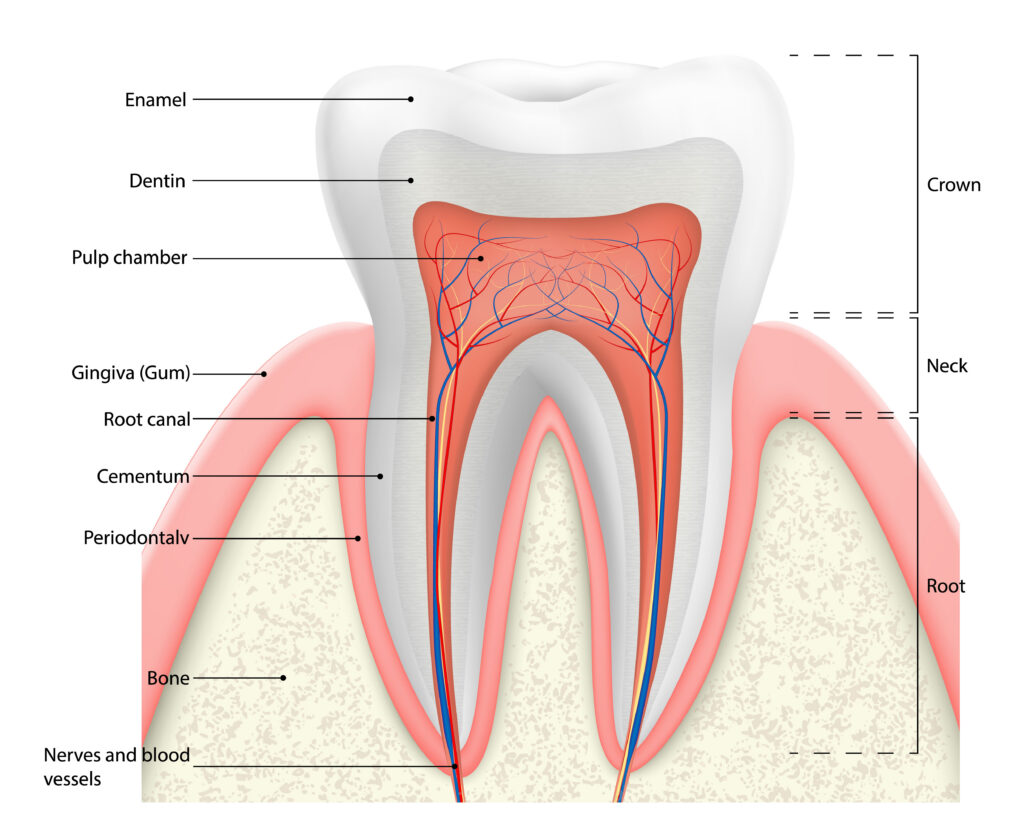
A normal tooth is filled with nerves and blood vessels called the pulp. This soft tissue (pulp), when infected or inflamed, often needs a root canal. A deep decay, crack, or repeated dental work can cause the infection. That infected pulp is what causes pain, not the treatment itself.
During the procedure, your dentist removes the damaged pulp and cleans and disinfects the inside of the tooth. Filling and sealing is what follows. Think of it less as “drilling into healthy teeth” and more as “cleaning the source of the problem”.
So Why Is It Uncomfortable Beforehand?
This is what fuels the myth. The intense, throbbing pain people associate with root canals almost always happens before treatment. Any guesses why? The infection. Once the diseased pulp is removed, the pain automatically goes away. Patients frequently report feeling immediate relief once the procedure is complete.
What You’ll Actually Feel During the Procedure
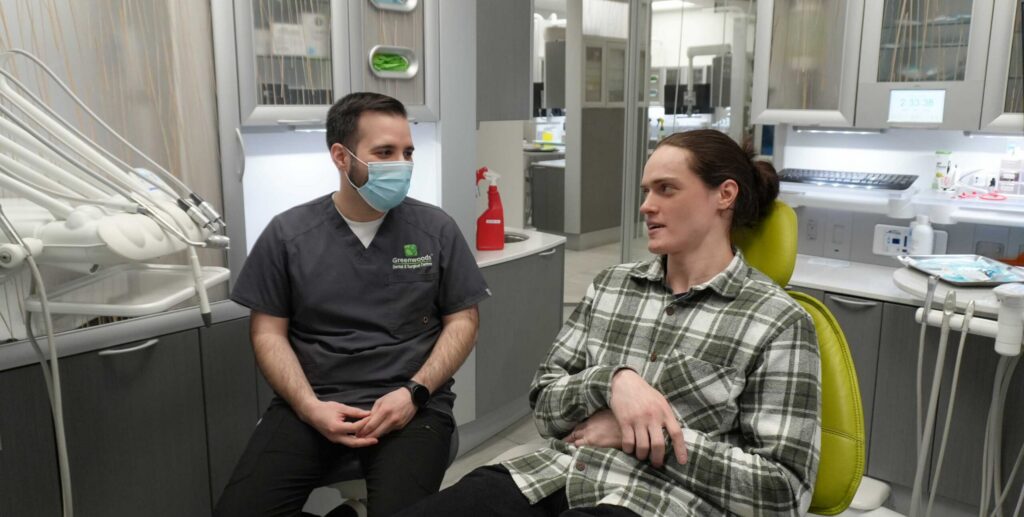
With modern local anesthesia, most patients feel little more than mild pressure or vibration during a root canal. It’s similar to getting a filling done. You shouldn’t feel a sharp pain while your dentist is working. If you feel discomfort or pain, tell your dentist right away; they can administer more anesthetic before continuing.
Numerous studies comparing patient-reported pain levels have found that root canal treatment causes no more discomfort than a routine filling.
What About After Treatment?
Some mild soreness or sensitivity for a few days after the procedure is normal – your tooth and surrounding tissue have just been worked on. Your doctor will prescribe an over-the-counter pain reliever like ibuprofen, which can help fade the soreness in a few days. It’s a far cry from the dramatic recovery the myth suggests.
If the pain continues or lasts for more than a few days, make sure to call your dentist’s office – but for most patients, it’s a non-event.
Root Canal vs. Extraction: Why Save the Tooth?
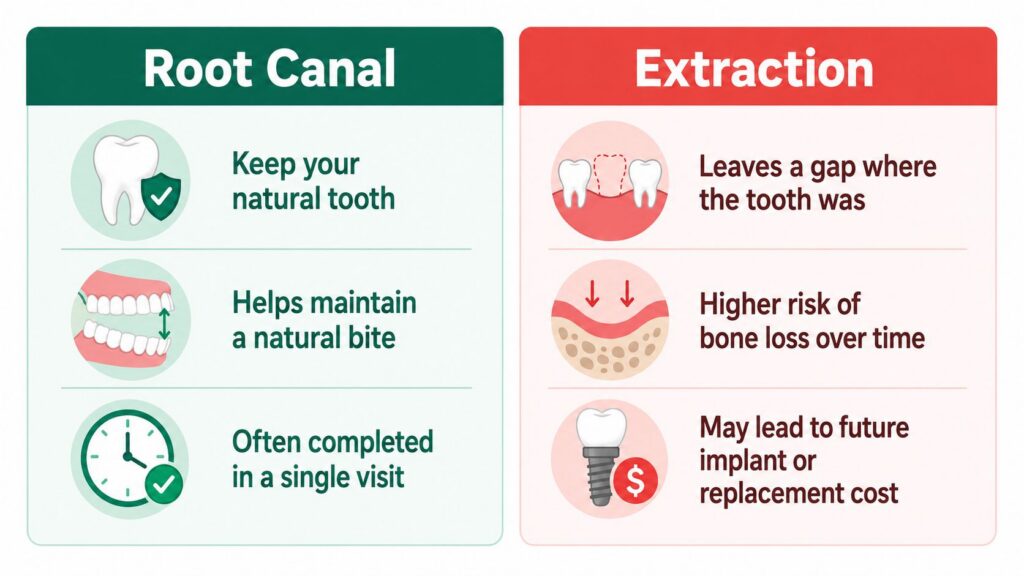 Faced with the option, some patients ask, “Why not just pull the tooth out?” Albeit a fair question, extraction usually creates more problems than it solves. Losing a natural tooth can lead to shifting teeth, bite changes, and even bone loss over time. Replacing it later with a bridge or implants is even more expensive and complex.
A root canal lets you keep your natural tooth and preserve bite function with a smile in a couple of appointments.
A Summary
The discussion that root canals are agonizing is one of dentistry’s most persistent myths – also one of the easiest to debunk. The procedure itself is designed to relieve pain, not cause it. Most modern techniques make the whole procedure no more uncomfortable than getting a filling.
If you have been putting off a root canal out of fear, that fear is likely based on a story or a myth. The most painful part of the whole experience is usually the toothache that sent you to the dentist.
Worried about an upcoming root canal? Our team is happy to walk you through exactly what to expect and answer your questions. Book an appointment or call us at 1-866-774-0006.