Refer a Patient





You are at your dentist for a root canal and wonder why they cannot just pull the tooth out and be done with it. We get it – root canals can be dreadful and arduous, but sometimes saving a tooth may be a better call than having to extract it or deal with more complex procedures.
Sometimes saving a tooth is the only way to avoid dental extraction and having to deal with expensive implants. More importantly, saving a tooth helps retain the shape and bite of your mouth, which otherwise would take multiple dental sittings and thousands of dollars in treatment costs.
Why Is This Even a Discussion?
An infected or decayed tooth with a prolonged underlying abscess can only have two paths:
- Save it with a root canal
- Extract it and replace it with implants
Dentists across the globe will almost everytime prefer saving the tooth through a root canal. The reasons are clear – your original tooth has the best structure and fit, which cannot be matched by artificial implants. Moreover, not every candidate has the jaw structure for an implant. Root canal is the safest and always the preferred treatment option on the table if possible. If not, only then an extraction is needed.
What Does a Root Canal Actually Fix?
A root canal actually targets your pulp – a soft tissue below the tooth that contains roots, nerves, and blood vessels. When infected, this pulp starts dying and warrants a root canal. A good root canal procedure cleans out the decay and fixes the excruciating pain in your tooth by sealing it with gutta-percha.
Once sealed, your dentist can reshape the tooth with crowns and cosmetic procedures as required. You can choose a composite or metal crown from the endless options available in modern dentistry; however, zirconia crowns are preferred due to their shade matching and faster turnaround times.
Good candidates for a root canal usually have:
- Enough healthy tooth structure left above the gumline to support a filling or crown afterward
- A crack that hasn’t extended down through the root
- Enough bone support around the tooth
- An infection that hasn’t destroyed too much of the tooth’s internal structure
When Extraction Becomes Necessary
Sometimes, a tooth is far too damaged or worn out in structure to warrant saving it. In fact, you would be wasting money and your time trying to save that tooth from the fall. In such cases, the dentist will choose extraction.
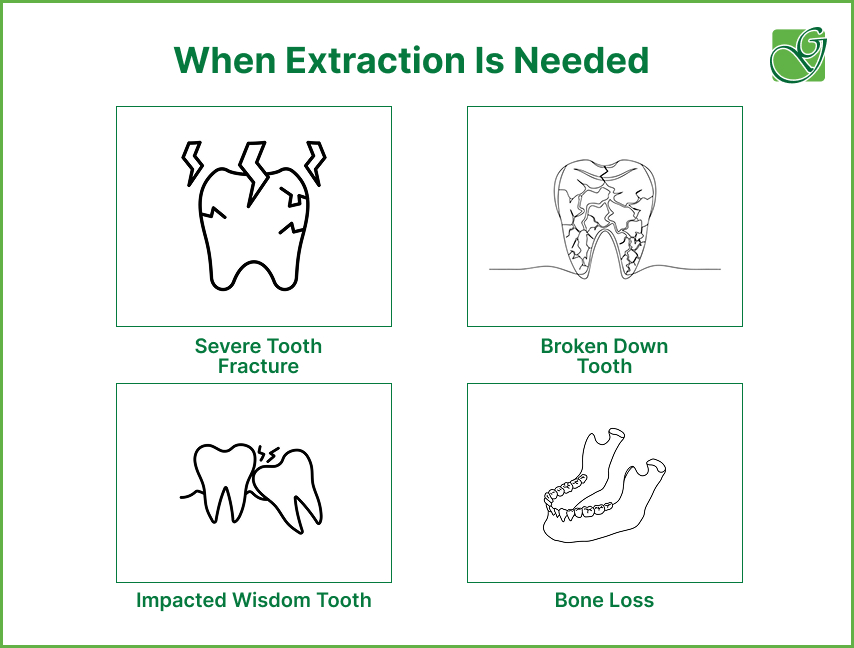
Dentists typically lean toward extraction when:
- The tooth is fractured below the gumline. If a crack runs down into the root, there’s no stable structure left to build a restoration on top of.
- There’s severe bone loss around the tooth. Advanced gum disease can eat away at the bone that holds a tooth in place — even a perfectly done root canal won’t help if the tooth doesn’t have solid support underneath it.
- The tooth is severely broken down. If decay or damage has destroyed most of the visible tooth structure, there may not be enough left to rebuild.
- A root canal has already failed. Sometimes a tooth is retreated once, but if the infection keeps coming back, extraction may be the only long-term option.
- The tooth is a problematic wisdom tooth. Impacted or troublesome wisdom teeth are usually pulled rather than treated, since they’re not doing much functional work anyway.
Why Dentists Avoid Pulling Teeth Out
- Preserves your natural structure. Keeping your original tooth means you get to preserve your bite and chewing strength.
- Prevents shifting. An empty or hollow space can give way to adjacent teeth, which can lead to shifting or misalignment issues.
- Avoid jaw issues. Your natural set of teeth stimulates the jawbone, thus preventing bone loss in your facial structure. This can affect your facial aesthetics in the long term.
- Higher costs. Extraction comes with its own demerits. Once a tooth is pulled out, the only option to replace it with is an implant – an option that can be expensive and time-consuming.
- Time. Saving the tooth avoids the long and often multi-sitting appointments that can be required post-extraction.
Cost and Time Factors
One of the most overlooked topics when considering extraction is how expensive and time-consuming it can get.
- A root canal procedure can be completed in two chairside appointments followed by a crown placement.
- An extraction might be quicker at first, but consider replacing the missing tooth, and you’ll quickly understand how complex everything can get. You are looking at an implant, multiple sittings to prepare the base for that implant, a bridge, or even partial dentures in some cases. Add extra healing time, and the proposal starts to look quite perennial.
It’s better to discuss options with your dentist before considering extraction and its treatment complications.
Summary of Deciding Factors
A quick mental checklist your dentist will consider before extraction:
- Whether you have enough healthy tooth structure to work with?
- Is the bone and gum support around the tooth still solid?
- Is the tooth coming in for a second root canal or had a previously failed root canal?
- What does the X-ray image show?
Root canal vs. extraction isn’t a coin flip – it’s a structural question. Can this tooth still function long-term, or has the damage gone past the point of no return? Your dentist’s job is to give you the honest answer, even when “save the tooth” is the decision you both make.
If you’re dealing with a painful or damaged tooth and aren’t sure which direction you’re headed, the best next step is simple: get it looked at sooner rather than later. Tooth problems don’t improve with time, and the earlier it’s checked, the more options you usually have.
Not sure if your tooth can be saved? Come in for an exam and we’ll walk you through exactly what your options are – no guesswork, no pressure. Book an appointment or call 1-866-774-0006.