Refer a Patient





How Common Is This Fear?
- In a Canadian health survey, 5.5% of respondents said they were “very afraid” of dental visits, and another 9.8% said they were “somewhat afraid.” That’s roughly 1 in 7 Canadians who are carrying some form of real dental anxiety.
- Globally, dental fear and anxiety affect nearly 15% of people, with 12.4% experiencing a high level of anxiety and 3.3% facing severe phobia [PMC].
- Comparing countries, Canada’s dental fear rate sits around 12.5% – just behind France (13.5%) and Russia (12.6%) but notably lower than China at 30%.
- Interestingly, dental anxiety tends to decrease with age. An Ontario study of adults 50+ found only 8.4% were classified as dentally anxious, with older individuals scoring significantly lower on anxiety scales than younger ones. (PubMed)
Where Does This Fear Come From?
- A bad past experience. People who had a painful, embarrassing, or frightening dental visit are over 22 times more likely to develop lasting dental anxiety. (Oral Health Group)
- The environment as a trigger. The sound of a drill, dental office smells, and even the sight of instruments can trigger anxiety. It can also bring back certain memories from the past.
- Bad communication with your dentist. More often than not, people attribute improper or rushed communication with their dentist as a separate factor for dental anxiety. Feeling unheard or ignored by the provider can make your visit unpleasant.
The Real Cost Of Avoidance
How To Overcome It
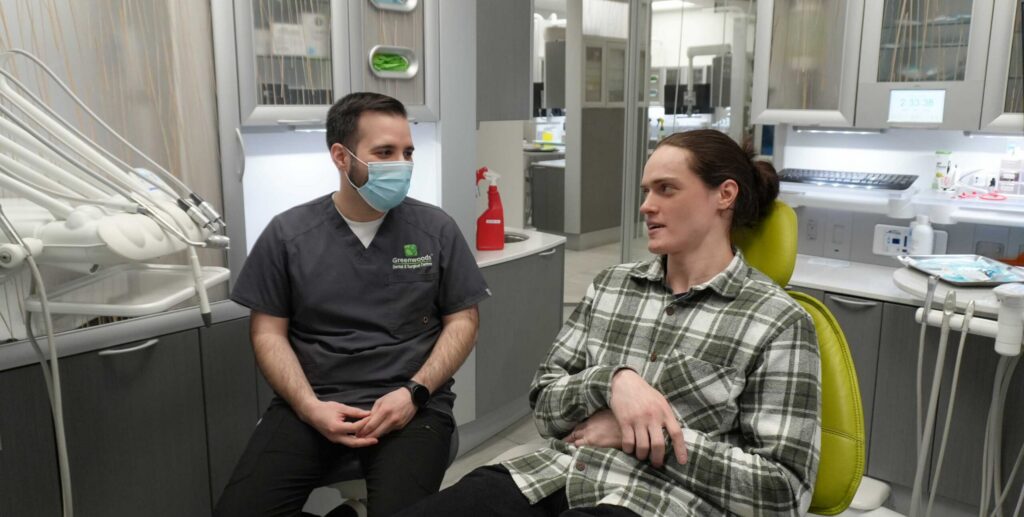
Start with communication
- Before your appointment or during consultation, ask your dental provider for details on each step in the treatment. This will help you get a better perspective on what’s to happen on that dental chair.
- Agree on a stop signal (raising your hand), so you always feel in control.
- Ask questions freely. Two-way communication with your dentist is always helpful and will help make your dental treatment easier.
Use distraction deliberately
- Bring your headphones and listen to music or podcasts during your visit. Research shows music effectively reduces anxiety during procedures.
- Ask about TVs or ceiling screens if your dental office has them.
- Focus on slow and controlled breathing – in for 4 seconds, hold for 4, and out for 4 seconds.

Consider sedation options
Bring a friend or family member
Frequently Asked Questions
What is dental anxiety, and how common is it?
Dental anxiety is the feeling of fear, nervousness or stress associated with visiting the dentist. It affects people of all ages and may range from mild discomfort to severe dental phobia (dentophobia).
How can I overcome my fear of the dentist?
Start by telling your dentist about your concerns. Ask for explanations before procedures, agree on a stop signal, practice slow breathing and consider bringing someone you trust for support.
Can I be sedated if I have severe dental anxiety?
Yes. Sedation dentistry may help patients with significant dental anxiety feel more comfortable. Depending on your health and treatment needs, options may include nitrous oxide (laughing gas), oral sedation or full IV sedation.
Does sedation dentistry mean I will be completely asleep?
Not necessarily. Nitrous oxide and many forms of oral or IV sedation help you relax while remaining conscious. General anesthesia produces a state of unconsciousness. Your dentist can explain which options are appropriate for you.
Does Greenwoods Dental offer options for anxious patients?
If you experience dental anxiety, let the Greenwoods Dental team know when booking. We can discuss your concerns, explain what to expect and help you explore suitable comfort measures, including available sedation options where appropriate.
The Bottom Line