Refer a Patient





Tooth extractions are a typical dental procedure, and for many individuals, recovery goes well with the right care. However, sometimes a painful issue known as dry socket can occur, disrupting the usual healing process. Although dry socket is not dangerous, it can be uncomfortable and annoying if you are unprepared for it.
This detailed guide describes what dry socket is, the proven causes, how to identify the symptoms, and what can be done to ease discomfort and promote proper healing.

What Is Dry Socket?
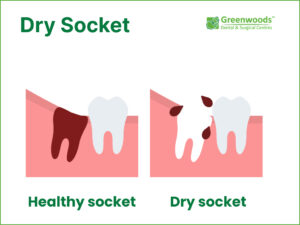
Dry socket, or alveolar osteitis, happens when the blood clot that usually forms after a tooth is pulled gets dislodged or dissolves prematurely. This clot is essential for healing as it safeguards the underlying bone and nerves while new tissue develops.
When the clot is lost, the bone and nerve endings are left exposed to air, food, and bacteria. This exposure results in pain, slower healing, and a higher chance of infection.
Dry socket is most frequently seen after the removal of wisdom teeth, but it can occur after any tooth extraction.
Why the Blood Clot Matters
When a tooth is taken out, the body reacts by creating a blood clot in the vacant socket. This clot:
- Serves as a shield for the bone and nerves
- Aids in tissue healing
- Minimizes bleeding
- Assists in avoiding infection
If the clot is disrupted, healing may not proceed as it should, making dry socket much more painful than the usual soreness after extraction.

How Common Is Dry Socket?
Dry socket is not very common, impacting a small number of extraction cases overall. However, the risk increases for specific procedures and individuals.
This condition is more often observed after:
- Impacted wisdom tooth removal
- Difficult or surgical extractions
- Extractions from the lower jaw
Although it is rare, knowing the risk factors and prevention methods can greatly lower the chances of getting dry socket.

Common Causes and Risk Factors
Dry socket doesn’t occur by chance. Various factors can raise the likelihood of the blood clot getting dislodged or not forming correctly.
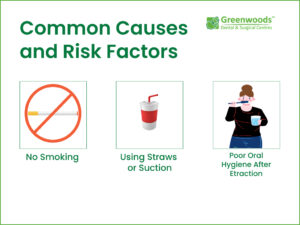
Smoking and Tobacco Use
Smoking is a major risk factor for dry socket. The suction from smoking can dislodge the clot, and nicotine may decrease blood flow, which slows down healing.
Using Straws or Suction
Any action that causes suction in the mouth, like using a straw, can disrupt the blood clot during the initial healing phase.
Poor Oral Hygiene After Extraction
Avoid aggressive rinsing, but poor oral hygiene can lead to bacteria buildup and hinder healing.
Hormonal Factors
Some research indicates that hormonal shifts, such as those associated with birth control pills, might slightly raise the chance of developing dry socket.
Trauma During Extraction
More complicated or surgical extractions might require more handling of bone and tissue, which raises the chances of clot disruption.
Previous History of Dry Socket
If you’ve had a dry socket in the past, you might be more likely to get one during future tooth extractions.
Signs and Symptoms of Dry Socket
Identifying dry socket early can assist you in getting treatment and easing discomfort more quickly.
Common symptoms include:
- Intense pain that arises two to four days post-extraction
- Pain that spreads to the ear, jaw, or temple
- A socket that appears empty where bone might be seen
- An unpleasant taste or smell in the mouth
- Pain that does not get better with standard pain relief methods
Regular discomfort from extraction typically gets better over time. If the pain increases rather than decreases, dry socket might be the reason.

How Dry Socket Is Diagnosed
A dry socket is usually identified during a clinical examination. Your dentist will evaluate the extraction area, consider your symptoms, and look for a blood clot presence or absence.
X-rays might be performed to eliminate other pain sources, like infections, leftover tooth pieces, or bone problems.
Treatment Options for Dry Socket
Although dry socket cannot be healed immediately, the treatment aims to relieve pain, prevent infection, and encourage proper healing.
Cleaning the Socket
The socket is carefully cleaned to eliminate food particles and bacteria. This process helps lessen irritation and promotes healing.
Medicated Dressings
A calming medicated dressing can be put inside the socket. These dressings usually have components that alleviate pain and shield exposed bone.
The dressing might need to be changed during multiple visits, based on how severe the symptoms are.
Pain Management
Options for pain relief can involve either prescribed medications or over-the-counter drugs, based on how much discomfort you are experiencing.
Antibiotics
If infection is suspected, antibiotics might be suggested to aid in recovery.
With appropriate treatment, symptoms usually get better in a few days, but full recovery may require more time.

What Not to Do If You Have Dry Socket
Some actions can make symptoms worse or slow down healing
Avoid:
- Smoking or vaping
- Using straws
- Touching the socket with fingers or objects
- Rinsing aggressively
- Ignoring persistent pain
It’s important to follow professional advice for recovery.
How to Prevent Dry Socket
Preventing dry socket is very important, particularly in the week following an extraction.
Follow Post-Extraction Instructions
Make sure to closely adhere to all aftercare instructions given by your dental team. These recommendations are meant to safeguard the blood clot and encourage healing.
Avoid Smoking
Refrain from smoking for a few days after the extraction. This action can greatly lower your risk.
Eat Soft Foods
Select soft foods that need little chewing and steer clear of hard or crunchy items that could irritate the area.
Gentle Oral Hygiene
Keep brushing and flossing, but stay away from the extraction site for the first day. Gently rinse with a solution recommended by your dentist to help keep the area clean.
Stay Hydrated Without Straws
Drink plenty of fluids directly from a cup to avoid suction.

How Long Does Dry Socket Last?
With treatment, pain usually gets better in 24 to 72 hours. Complete healing of the socket can take one to two weeks, depending on personal factors and following care instructions.
If left untreated, dry socket symptoms might last longer and raise the chance of infection.
When to Contact a Dental Professional
You should seek dental care if you experience:
- Increasing pain several days after extraction
- Pain that spreads to the ear or jaw
- Foul taste or odor that does not go away
- Difficulty opening your mouth or swelling
Prompt treatment helps relieve pain and prevents complications.

Final Thoughts
A dry socket can be a painful and surprising issue after having a tooth pulled, but it can be managed effectively with proper care. Knowing the causes, recognizing early signs, and following the right aftercare can significantly impact your healing process.
Adhering to post-extraction guidelines, steering clear of behaviors that hinder healing, and getting timely help if pain increases can minimize complications and promote a more seamless recovery.
When to Seek Help
If you are feeling more pain a few days after an extraction, pain that radiates to your ear or jaw, or a constant bad taste or smell, getting professional help can ease your discomfort and stop more problems from happening.
If you are worried about dry socket or healing after extraction, scheduling a dental appointment lets your dentist check the area, reduce pain, and help you understand the next steps for proper recovery.